2026 Printer’s Guide: Are Meiji Blankets Better Than European Brands?
Author: Site Editor Publish Time: 03-05-2026 Origin: Site
Introduction
For decades, press operators and print shop managers have debated a critical question on industry message boards: What blankets are you using? If you look back at legendary industry discussions—such as the massive 2008 thread on the PrintPlanet forums—you will see operators fiercely defending their favorite brands and sharing their real-world pressroom trials. Fast forward to 2026, press speeds have drastically increased, UV printing has become mainstream, and tolerances are tighter than ever.
Yet, when we review those early expert evaluations, one brand frequently highlighted for its exceptional quality was Meiji. As an experienced industry distributor, we are often asked if classic recommendations still hold up today. By analyzing those veteran pressmen's debates alongside modern 2026 printing standards, we can uncover exactly why Meiji offset blankets remain a top choice for commercial and packaging printers.
Core Factors in Blanket Selection: What Operators Actually Care AboutWhen distilling the scattered forum arguments and troubleshooting posts into a logical consensus, it becomes clear that real-world press operators judge a printing blanket on four absolute metrics:
Smash Resistance and Gauge Stability: The most common complaint on printing forums is downtime caused by blanket smashes. A high-quality blanket must possess an advanced compressible layer capable of absorbing impacts from paper folds or multiple sheets, then immediately rebounding to its original thickness without sinking.
Dot Reproduction and Sharpness: Operators consistently seek blankets that minimize dot gain. The surface rubber must have optimal ink affinity to ensure full ink coverage while maintaining ultra-sharp dot structures.
Quick Release Characteristics: Web and high-speed sheet-fed operators frequently debate paper release properties. A blanket with poor release causes the substrate to stick, leading to registration issues, web breaks, or severe curling on thin stocks.
Chemical and Solvent Resistance: In the 2026 landscape, the transition to UV and LED-UV inks makes this the most critical factor. Standard blankets suffer from severe swelling and blistering when exposed to aggressive UV inks and washes.
Expert Opinions and the Global Brand DebateIn historic PrintPlanet discussions, operators tested a wide array of global brands, comparing European, American, and Japanese manufacturing standards. While several legacy brands had loyal followers, independent evaluations brought a specific Japanese manufacturer into the spotlight.
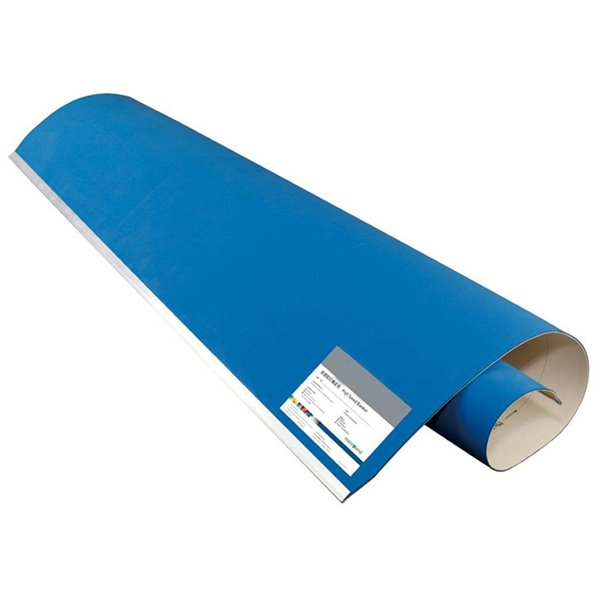
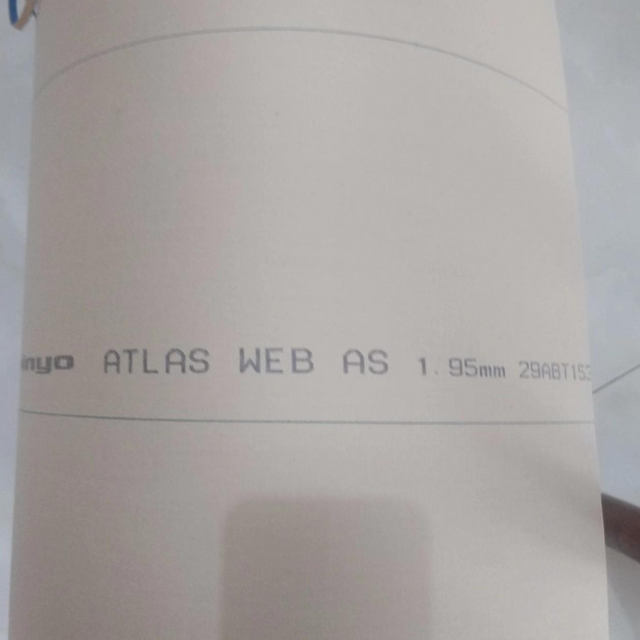
Evaluators who tested numerous blankets from around the world explicitly noted the Meiji 9600A as one of the highest-quality options on the market. Distributors and pressmen alike reported having "no problems" after switching, emphasizing that printers simply loved how the blanket performed on the press.
Why does this reputation endure in 2026? Because Meiji continued to build on that foundation. The closed microcell compressible layer that made the 9700A a favorite for high-speed sheet-fed presses evolved alongside the industry. Today, models like the Meiji UV-329 offer unparalleled resistance to the swelling caused by highly corrosive UV inks, maintaining the exact uniform thickness and excellent ink transfer that operators praised over 15 years ago. Furthermore, with modern requirements demanding food-safe packaging, Meiji’s ISEGA certifications ensure they meet current global regulatory demands.
Common Pitfalls in Blanket Procurement
Through analyzing years of pressroom discussions, we have identified several common mistakes buyers still make today:
Ignoring the Compressible Structure: Buying a blanket solely based on surface feel. If the microcell layer is inferior, the blanket will lose its elasticity and require constant re-tensioning.
Mismatched Ink Compatibility: Using a conventional offset blanket on a press running UV inks. This inevitably leads to premature degradation and edge marking.
Chasing the Lowest Upfront Cost: As veteran operators point out, a cheap blanket that requires replacement after a minor smash or causes constant press stops actually results in a drastically higher Cost-Per-Impression (CPI).
ConclusionThe printing industry is unforgiving. If a printing blanket brand was highly recommended by seasoned press operators back in 2008 and remains in heavy demand in 2026, it is a testament to unwavering quality control and technical adaptation. Meiji has proven that by mastering smash resistance, dot sharpness, and solvent durability, a brand can stand the test of time.
Shanghai Chenjie Printing Materials Co., Ltd. is a proud distributor of Meiji offset printing blankets. Contact us today to get a competitive quote and expert advice on selecting the perfect Meiji blanket for your specific press requirements.
In order to fill in the printing field of environmental printing, research and development the all non-alcoholic fountain solution, it is a good solution to he traditional difficult to overcome the problem of energy saving, environmental protection, safety and soon.