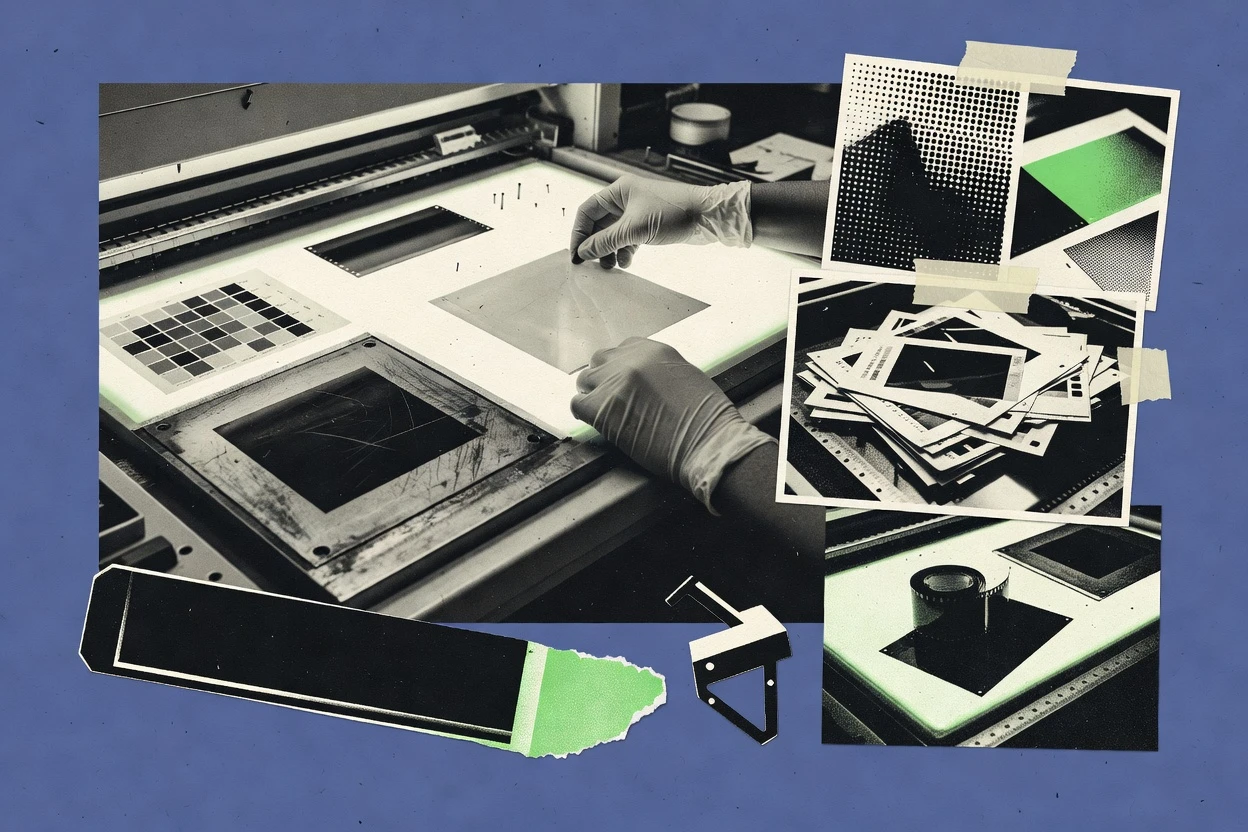
How commercial and packaging print shops stop giving away free design hours, quote file prep fairly, and talk to clients without sounding like a prepress textbook.
Every print shop owner and prepress operator knows this exact scenario. A customer sends over whatever file happens to be sitting on their desktop — sometimes a tiny 4×4-inch graphic they want blown up into an 8×8-foot banner, or a folding carton layout with live text sitting right on the die-line — and expects you to “just make it work.”
When you run offset presses, letting messy files slide through prepress doesn’t just burn studio time. Rushed, last-minute file patches lead to bad plates, fountain solution and blanket wash, extra make-ready sheets, and expensive press downtime when a job has to be pulled mid-run. Still, nobody wants to look difficult by kicking back every single order over a minor hiccup. So where does a print shop’s responsibility actually end?
Flexible Quick Tweaks and Free Design Work
In day-to-day production, most shops quietly absorb tiny technical fixes just to keep jobs moving toward the press. Adding a standard 1/8-inch (3mm) bleed for full bleed printing, nudging an alignment mark, converting an accidental spot color to CMYK, or running a quick preflight check takes a couple of minutes. Stopping the train to email a client over a two-minute fix slows everyone down.
The trouble starts when “just fixing it” turns into real graphic design work. Rebuilding a pixelated raster logo, shifting copy away from fold or trim areas, reworking a broken layout, or resizing artwork built at the wrong proportions crosses a clear boundary. Worse yet, if your prepress team silently fixes major problems for free, the customer assumes their original file was fine — and sends you the exact same mess on their next order.
Draw the Line at the Estimating Stage
The cleanest way to eliminate unpaid file prep is to set the rule before the job ever hits your prepress queue. Put the boundary right on your estimate.
Every quote should state plainly that your pricing is based on receiving print-ready files. Once a print ready PDF or native file comes in and preflight reveals missing bleeds, low-resolution images, or broken typography, your team shouldn’t bury an hour of cleanup inside your press run margin. Instead, pause the job and give the client two straightforward choices: they can fix the file and resubmit it, or your prepress department can fix it for a separate, approved fee.
What Print Shops Charge for File Fixes in 2026
If you feel awkward charging for prepress adjustments, remember that your studio workstations, RIP software, and skilled operators cost real money to run. Across commercial and packaging print shops, charging for prepress services — file repair, bleed fixes, and design work — generally falls into a few proven tiers depending on the complexity of the work:
Shop Type / Pricing Model | Typical Rate | How It Works in Practice |
|---|---|---|
General Commercial Print | $35 / hour | Basic preflight checks are included free with orders; hourly rate kicks in for file cleanup. |
Mid-Size Commercial & Digital | $69 – $75 / hour | Standard graphic design and file-prep add-on rate when customer artwork fails preflight. |
Strict Trade / Offset Shops | $100 / hour | Zero free fixes. Files are either kicked back to the buyer or billed in 15-minute blocks. (A rate published by individual shops - confirm current figures in your own market.) |
Flexible Packaging & Labels | Quoted per job | Covers complex trapping, white-ink underprints, die-line adjustments, and multi-SKU prep. Too variable to price by the hour. |
Flat-Rate Menu Pricing | $25 – $50 per issue | A flat "file preparation" line item for artwork that needs significant work before it can run. |
A Shop-Floor Cheat Sheet for Your Prepress Team
To keep estimators, CSRs, and prepress operators on the same page, it helps to post a simple rulebook right next to the preflight station. When the visual appearance of the piece stays untouched, fix it fast. The moment a change alters what the finished piece looks like, stop and get approval.
File Issue Encountered | Where to Draw the Line | Recommended Action |
|---|---|---|
Minor bleed (1/8″ / 3mm) or simple setup error | Included | Fix during preflight to keep plates moving on schedule. |
Low-resolution images or raster logos | Client decision required | Flag the image; ask the client to supply vector/high-res art or approve printing smaller. |
Text or graphics too close to trim or crease | Visual layout change | Show the trim risk on a PDF proof and get written sign-off before shifting elements. |
Rebuilding logos, changing ratios, or re-layout | Billable design work | Stop work, send a separate prepress quote, and wait for written approval. |
Client says “Just fix it and send the bill” | No verbal blank checks | Send a quick written estimate first so there are zero surprises on the final invoice. |
Explain the Print Result, Not the Technical Jargon
Most print buyers aren’t graphic designers, and they don’t need a ten-minute lecture on effective DPI, overprint settings, or bleed mechanics every time they place an order. Sending a non-designer a wall of prepress terminology usually triggers confusion and delays proof approvals.
Instead of explaining the technical flaw, tell them what will physically happen on press or at the cutter if the file isn’t fixed:
Skip: “Your embedded logo has an effective resolution below 150 DPI at final scale.”
Say: “This logo is going to print blurry and pixelated at this size.”
Skip: “Your document lacks a 0.125-inch bleed past the trim box.”
Say: “Without extra color extending past the cut line, you risk getting an ugly white edge along the border.”
Skip: “Live typography violates the 3mm safety margin inside the die-line.”
Say: “Your text is sitting right on the fold and could get clipped when we die-cut the sheets.”
Two Ready-to-Use Clauses for Your Next Quote
You don’t need a ten-page legal contract to protect your prepress department. Dropping one of these short notes directly onto your quote templates sets clear expectations from day one:
OPTION 1: STANDARD PRINT-READY ASSUMPTION
“This quotation assumes your artwork is production-ready. Any prepress work—including adding bleed, fixing low-resolution images, adjusting layouts, or rebuilding vector logos—is quoted separately at our standard hourly rate and only begins after your written approval.”
OPTION 2: FREE PREFLIGHT + 15-MINUTE BILLING
“Basic preflight checks are included free with every order. File repairs and prepress adjustments are billed at $[XX]/hour in 15-minute increments, subject to your approval before work begins.”
Keep Your Presses Turning Profitably
Helping a customer out of a jam once in a while is just good service, especially for steady repeat accounts. But making a habit of fixing bad files for free trains buyers to treat your prepress department like an unpaid design agency. Set clear rules on your quotes, ask for print-ready artwork up front, speak plain English when flagging file errors, and save your pressroom’s time, plates, and chemistry for jobs that actually pay the bills.