An in-house print department can pay for itself inside a couple of years, but only when the building, the power and the consumables are chosen with the same discipline as the press.
The arithmetic that sends most businesses looking at their own press is sound, and it is rarely where the money goes missing.
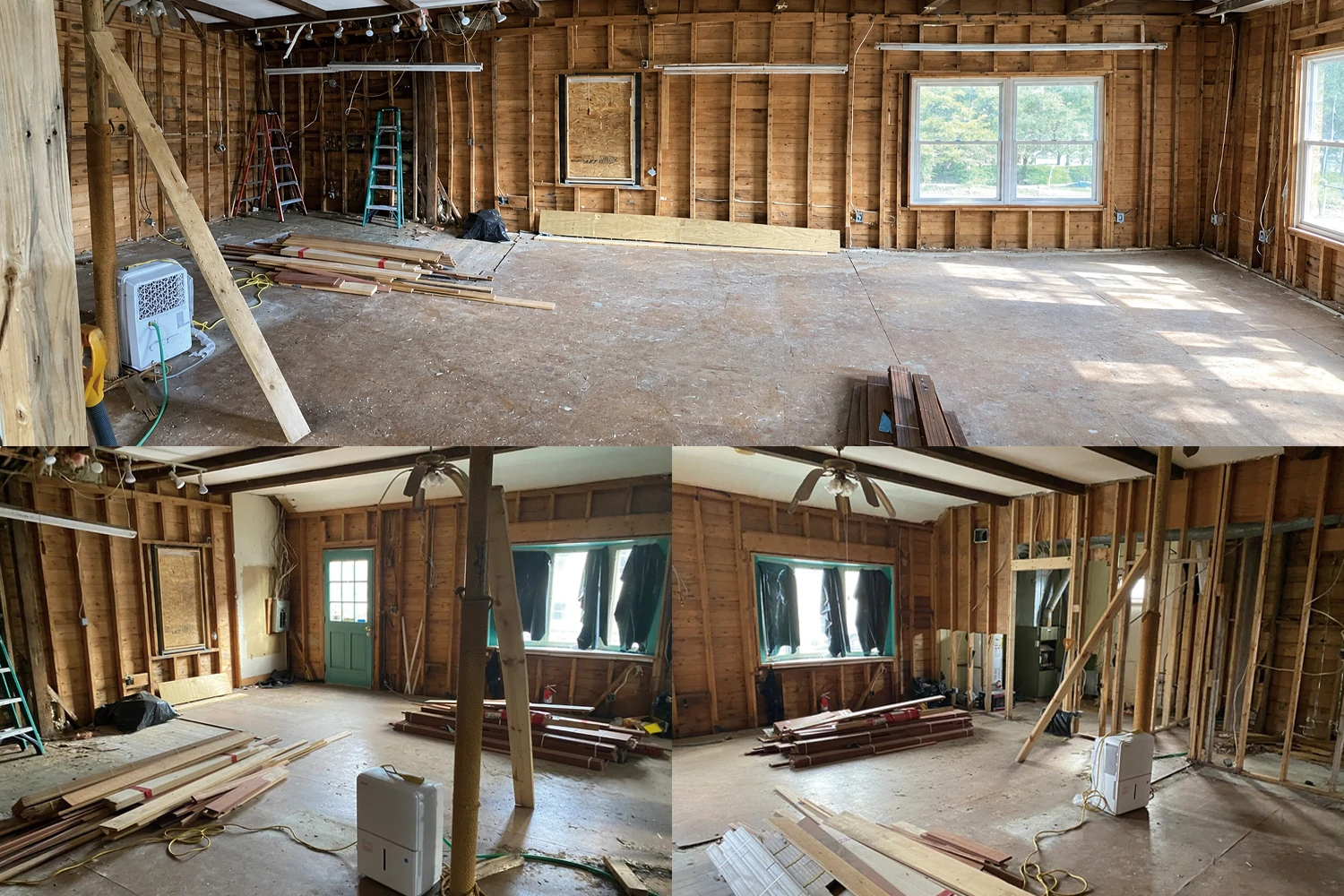
A company spending $90,000 a year on booklets alone, and somewhere between $300,000 and $600,000 across postcards, brochures, door hangers and yard signs, is entitled to ask why it does not print those things itself. That question sat behind a long exchange on the PrintPlanet forum, in which an entrepreneur outside Boston described gutting a 1,000 sq ft standalone building and fitting it out as an in-house print department, with the intention of opening to the public once the process settled. On paper the plan held together: a production digital press, a large format machine for banners and stickers, automated booklet making, plus foil, lamination and die cutting from day one.
The in-plant managers and shop owners who replied did not argue with the ambition. They argued with the order of events. Between them they had already paid for each mistake on the list below, once.
1. The 1,000 Sq. Ft. Reality Check (And the Doorway Trap)
A thousand square feet stops being a large room the moment a production press, its paper decks and a guillotine arrive.
A owner posted photographs of the stripped interior, with exposed studs, ceiling beams, a concrete floor, a portable dehumidifier standing in the middle of the room, a window air conditioning unit and a standard green front door, the replies turned practical within a paragraph. The doorway was the first obstacle named.
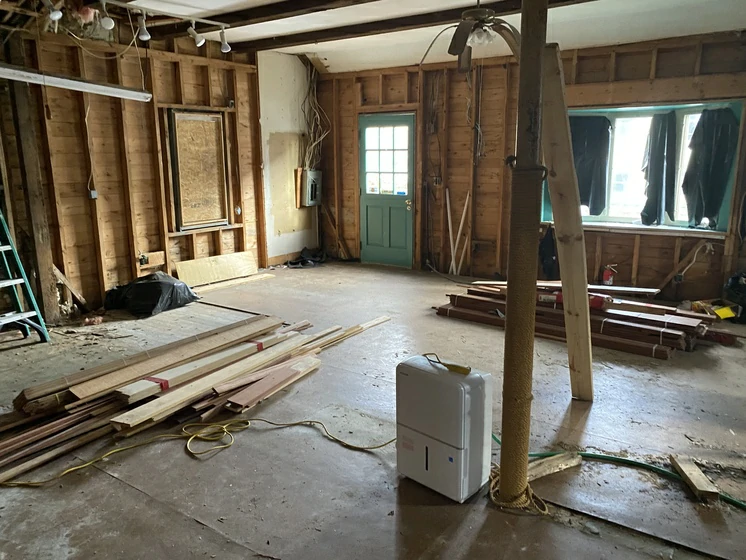
A production digital press, with its engine, high-capacity paper decks and inline finishers, will not pass through a 36-inch pedestrian door. Nor will a heavy-duty guillotine, a commercial laminator or a flatbed digital die cutter. Without wide double doors and a permanent exterior ramp none of it can be wheeled in, and neither can pallets of paper on a pallet jack. It is not simply the machines that have to fit. Everything that feeds them has to fit as well.
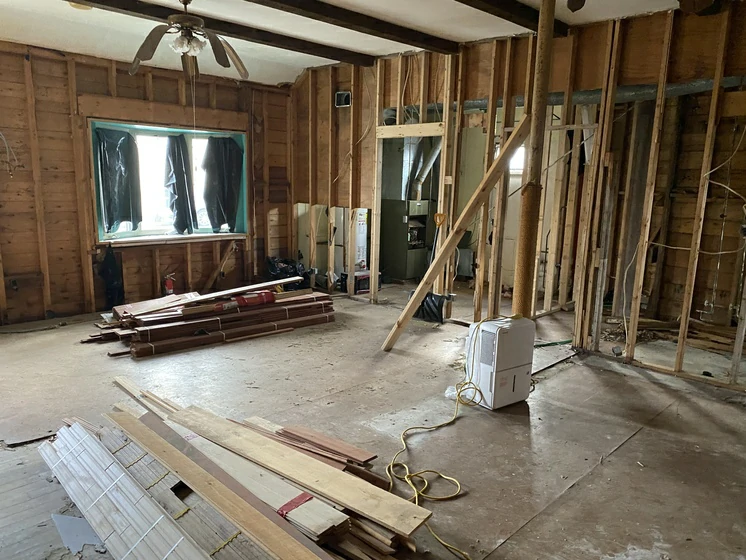
Beyond the doors sit the structural and utility questions that decide whether the equipment works as specified once it is inside.
Requirement | What it means before the press lands |
|---|---|
Doorway and access route | Wide double doors and a permanent ramp, or the press never gets in. Pallets of paper need the same route, on a pallet jack. |
Floor load capacity | Commercial guillotines and production presses weigh thousands of pounds. The subfloor has to carry that weight without shifting. |
Dedicated electrical drops | Production presses, UV coaters and large heated laminators each need high-voltage, multi-phase circuits of their own. |
Flat working tables | Large format banners and vinyl need substantial flat surfaces for weeding, hemming, grommeting and mounting. |
2. Why "Full Automation" Can Actually Slow You Down
Automation is a second process to be set up, monitored and paid for, and in a small shop it rarely earns that effort in the first year.
Watching a seasoned operator on YouTube, the channel Just a Printer is the usual reference, send a stack of sheets through a multi-tower suction collator that staples, folds and face-trims without intervention looks effortless. Newcomers reasonably conclude that buying the automation is the cheapest way to buy back labour. The experienced hands on the thread accepted the appeal of that argument and were nearly unanimous that it does not pay yet.
Collating towers and inline finishers demand precise mechanical set-up, and they are notorious for static electricity. Where a shop prints 5,000 identical booklets, automation earns its keep. Where it prints 50 to 100 personalised real estate booklets, or odd-sized work with bleed, an operator can two-knife cut the stack on a guillotine and hand-feed 100 books into a standalone booklet maker in five minutes, long before a tower has been dialled in.
The advice that came back was to buy a lean, bulletproof core instead, and to add automation when a specific application justifies it.
Print shop equipment | Why it earns its place |
|---|---|
One workhorse digital sheetfed press | Ricoh, Konica Minolta, Canon and Xerox are the four names that matter. A Ricoh Pro C7210x or a Xerox Versant 280 is the class of machine under discussion. |
A heavy-duty programmable guillotine | Used Challenge or Polar cutters last for decades and hold their accuracy. |
A slitter, cutter and creaser | A Duplo DC-646 handles business cards and postcards, and scores covers so heavy digital stocks do not crack on the fold. |
A simple booklet maker | An offline machine such as a Duplo DBM-150 covers the short runs that would otherwise choke an automated line. |
3. The "Storage Pod" Mistake: Paper and Consumables Are Alive
Paper is hygroscopic: it takes on moisture from the air and holds it.
When floor space tightens, the temptation is to put the pallets and the spare stock in a weather-tight container in the yard or an unconditioned garage. The answer from the thread was blunt. Do not do it. A pod that keeps the rain out will still hand back stock that has absorbed moisture overnight and dried out at midday.
Cold or damp paper carried into a warm pressroom shows the damage within a shift: wavy edges, severe curl, toner transfer failure and constant misfeeds. The same logic applies to laminating film and to specialty substrates, which are more sensitive to ambient conditions than many buyers expect.
Paper storage humidity is the variable most often ignored, and it is the one that decides whether a pallet prints or jams. The practical rule is a climate-controlled room held at a stable temperature and stable relative humidity, with conditioned shelf space reserved in advance. Paper supply is also tighter than newcomers assume. Accounts with merchants and consumable suppliers need to be opened early, because buying happens when stock is available, not when the job arrives.
4. Downstream Gremlins: How Static, Curl and Consumables Interact
Buying the machines is the easy half. Getting substrates and consumables to behave across three or four processes is where new shops lose money.
Every unit in a print finishing line is a precision instrument, and a small calibration error or the wrong consumable at step one will wreck the job at step three. Four examples recur on the shop floor.
A decurler that delivers a curled sheet will jam the laminator.
If the decurler on a colour digital press is not dialled in to deliver a dead-flat sheet, an upward curl will stop the automatic feeder on the laminator or the folder several times an hour.
Digital toner plus thermal laminating film generates static.
A two-sided gloss lamination job thrown straight onto a flatbed cutter will have its suction cups pick up double sheets and jam. Operators let laminated stacks rest overnight to discharge, or fit anti-static tinsel and specify films formulated for digital print.
Tension on single-sided synthetics and sticker vinyl is a fine adjustment with a coarse consequence. If the laminator's anti-curl bar is slightly off, the corners lift, the vacuum belt cannot pull them flat, and the kiss-cutting blade catches and tears the sheet.
Eco-solvent printers object to being left idle. Adding a large format roll printer to practise on sounds sensible until the printheads clog after a week without work. Solvent inks also off-gas VOCs, which need dedicated extraction or filtration, and in a 1,000 sq ft unit that extraction has to be designed rather than borrowed.
Service contracts: lease the press, own the finishing kit
Buyers resent per-page click charges and assume that a maintenance crew or a local IT supplier can keep a press running. Few can. The technicians who rebuild presses on camera have decades of mechanical and board-level electronics experience behind them. For everyone else, a production digital press without a full cost-per-copy contract covering toner, drums, fusers and call-outs is a liability waiting to mature. Lease the press with full service, and buy the guillotine, the creaser and the booklet maker outright, because print finishing equipment outlasts the press by a decade.
5. Hire the Operator Before You Buy the Iron
A press that runs at half the brochure speed, with up to 20 per cent material waste while the team learns, is the realistic first-year machine.
Sales representatives can be relied upon to describe rated speed and zero waste. In practice one ruined job in ten cancels the profit on the other nine, and an inexperienced operator will ruin more than one in ten before the workflow settles.
The sequence that veterans recommend runs the other way round: hire the manager, then buy the iron. A print manager who can rescue a badly prepared customer PDF, negotiate click rates and match papers, toners, blades and laminating films to the right machine will save thousands of dollars a month from the first week. Shops that cannot yet justify that salary can operate as a broker instead, sub-contracting offset, foil and die cutting to trade printers while handling the straightforward digital work in-house.
For an in-plant printing operation serving its own group companies, that split is the difference between a department that grows and one that carries equipment it cannot fill.
Shop function | Do it in-house from day one | Outsource to trade or specialist |
|---|---|---|
Core digital runs | Short to medium runs of flyers, postcards, business cards and standard saddle-stitched booklets | Long runs of 5,000 pieces and above, where commercial offset litho is far cheaper per unit |
Print finishing and bindery | Guillotine trimming, slitting, creasing, perforating and basic thermal roll lamination | Heavy custom die cutting, hot foil stamping and raised spot UV, until volume justifies the gear |
Signage and promotional work | Basic laminated graphics, where space allows flat finishing tables | Solvent large format banners, vehicle wraps and promotional apparel, which avoid fumes and idle printheads |
The Bottom Line for Growing Print Shops
In short, building an in-house print shop can change the economics of a marketing budget, provided the craft is respected. Start with a clean, climate-controlled room and wide doors, invest in the core press and bindery essentials rather than in automation nobody asked for, put the press on a local dealer service contract, and work with a print consumables supplier who can match papers, laminating films, cutting sticks and blades to the way the shop actually runs.
The machines are the visible part of the decision. The space, the power, the humidity and the operator are what decide whether the invoice in year two is smaller than the one that started it all.