Views: 0 Author: Site Editor Publish Time: 08-20-2026 Origin: Site


An offset additive is a chemical compound blended into lithographic paste inks to adjust body, tack, drying speed, and water resistance. These pressroom auxiliaries make up 2.0-5.0% w/w of the ink mix. They help press operators stabilize ink transfer across different press speeds, ambient conditions, and paper grades.
Commercial paste ink for offset printing contains three main ingredients:
Solid pigment particles (15-25% w/w) for color
Macromolecular binder vehicle (70-80% w/w) made of synthetic resins dissolved in vegetable oils or mineral distillates
Factory performance additives (2-5% w/w) for shelf stability
While factory ink meets standard ISO 2846-1 color criteria under lab conditions, real pressroom conditions fluctuate. Changes in room temperature, relative humidity, press speed, roller train friction, and paper absorbency can disrupt ink transfer. To adjust the ink paste on the fly, press operators introduce auxiliary ink additives for offset printing (胶印助剂).
Think of commercial offset printing ink as dense bread dough. The factory supplies you with the base mix of flour (pigment) and shortening (resins and oils). On the pressroom floor, offset printing ink additives work like water, butter, or yeast added by a baker:
Adding a few drops of oil softens a stiff batch so it moves through the ink duct smoothly.
Adding a gel agent loosens stickiness without making the mixture watery.
Adding a chemical catalyst speeds up how fast the crust hardens on the delivery stack.
Era | Core Chemistry | Practical Pressroom Impact |
|---|---|---|
Pre-1950s (Varnish Era) | Linseed oil litho varnishes, lead-based driers | Curing took several days; skinning risks on rollers were high. |
1950s-1980s (Synthetic Era) | Phenolic resins, petroleum fractions, cobalt/manganese soaps | Faster press speeds; tack standardized using rotary meters (ISO 12634). |
1990s-2010s (Low-VOC Transition) | Fatty acid methyl esters, mineral-oil-free (MOSH/MOAH-free) binders | Lower solvent emissions; cleaner pressroom air; safer handling. |
2010s-Present (Sustainable Era) | Cobalt-free iron/manganese catalysts, low-migration packaging recipes | Non-toxic curing systems meeting REACH and EuPIA health rules. |
Offset printing auxiliaries fall into distinct functional groups. Dosing must stay within target limits to prevent press faults.
Comparing maximum safe operational limits across primary additive categories.
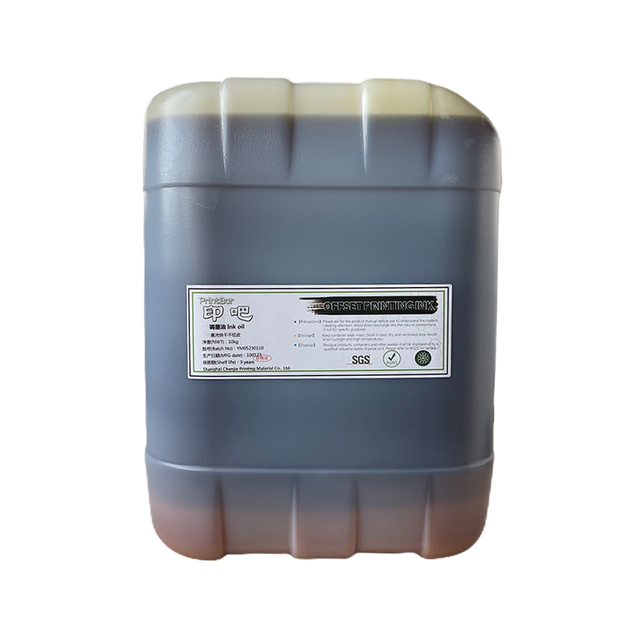
Formulated from hydrotreated heavy petroleum distillates boiling at 260-290°C (500-554°F) or vegetable fatty acid esters. It drops dynamic viscosity (flow resistance) and tack sharply, helping move thick ink down long roller trains. Think of adding light broth to a thick pasta sauce so it flows through a narrow spout.
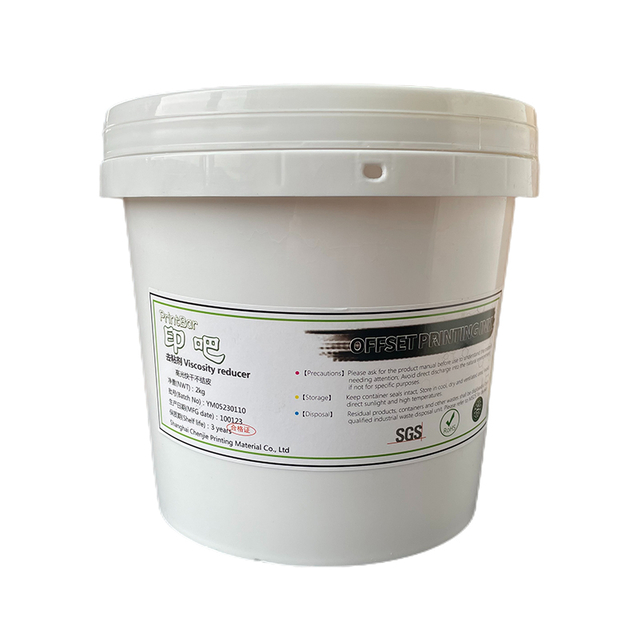
Formulated from aluminum stearate-gelled alkyd resins, polyamide thixotropes, or microcrystalline waxes. An ink viscosity reducer lowers ink stickiness (tack) without thinning out ink body or causing high-speed ink misting. Picture softening cold butter into a spreadable cream without melting it into liquid grease.
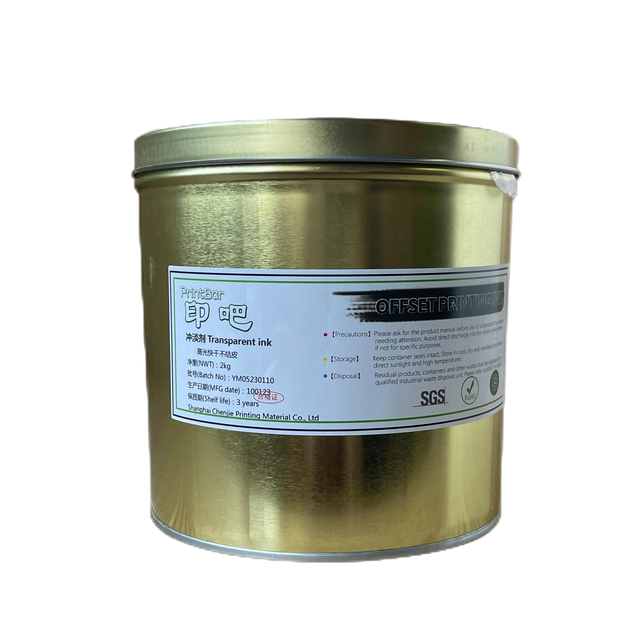
Formulated from precipitated alumina hydrate (Al2O3·xH2O) or treated calcium carbonate ground into clear alkyd varnishes. It lowers color density and lightens shades without hurting ink body, gloss, tack, or water balance. Like adding soda water to sweet syrup, it lightens the flavor intensity while keeping full liquid volume.
Formulated from cobalt octoates, manganese carboxylates, or iron-bispidon complexes. It speeds up oxygen cross-linking at the surface where the printed sheet touches air, creating a quick dry skin. Think of a fast-drying clear coat that stops dust from sticking to the surface.
Formulated from zirconium, calcium, barium, or cerium poly-carboxylates in paste carriers. It promotes thorough curing from the paper surface all the way up through the ink layer. Like baking bread with even bottom heat, the center dough bakes instead of just crusting on top.
Formulated from spherical native corn starch or modified potato starch particles (15-35 µm). Applied by spray, anti set off powder forms microscopic physical spacers between stacked fresh sheets in the delivery pile, stopping ink from transferring onto sheet backs. Picture tiny rubber cushions between stacked glass plates so the wet surfaces never touch.
Sheetfed Offset: combines absorption and oxidation drying. Requires balanced surface and through driers plus precise anti-set-off powder delivery.
Heatset Web Offset: runs at high web speeds (10-15 m/s) with hot-air ovens (120-150°C). Drierless inks use high-boiling oils and anti-misting gel reducers instead of oxidative catalysts.
Coldset Web Offset: dries by capillary penetration into porous newsprint with no thermal drying. Additives focus on penetration modifiers rather than oxidative driers or powder.
Adjusting an ink mix changes multiple mechanical behaviors at once:
Additive Class | Tack (T) | Viscosity (η) | Surface Drying | Through Curing | Print Gloss | Set-Off Risk |
|---|---|---|---|---|---|---|
Ink Oil (Liquid) | ↓↓ Major Drop | ↓↓ Major Drop | ↓ Slight Delay | ↓ Slight Delay | ↓↓ Loss | ↑↑ High Risk |
Gel Reducer | ↓ Controlled Drop | → Minor Drop | → Neutral | → Neutral | ✓ Preserved | ✓ Safe |
Clear Extender | ↓ Slight Drop | → Neutral | → Neutral | → Neutral | ✓ Preserved | ✓ Safe |
Top Drier (Liquid) | → Neutral | → Neutral | ↑↑ Fast Skinning | ↑ Slight Speedup | ↓ Minor Loss | ↓↓ Low Risk |
Through Drier (Paste) | → Neutral | → Neutral | ↑ Slight Speedup | ↑↑ Full Deep Cure | ✓ Preserved | ↓↓ Low Risk |
Heavy Solids on Coated Board: avoid liquid oils (they dull the surface). Blend 1.5% gel reducer + 1.0% through drier, then apply 20-25 µm anti-set-off starch powder.
Four-Color Wet-on-Wet Sequence: keep a stepped tack sequence down the press units to prevent back-trapping: Black (14 TU) → Cyan (12 TU) → Magenta (10 TU) → Yellow (8 TU). Use gel reducers to hit these numbers.
Uncoated Porous Paper: avoid liquid reducers to prevent oil from sinking into fibers and leaving chalky, loose pigment on top. Use 10-20% clear extender to hold pigment binding intact.
Ink tack measures the force needed to split an ink film between two turning rollers or between blanket and paper. Under ISO 12634, tack sits between 8-16 TU (Tack Units) at 32°C (90°F) and 400-1200 rpm.
Tack follows the Stefan-Reynolds fluid dynamics formula: T ∝ (η · v · A) / h³
T = Splitting resistance (Tack)
η = Dynamic viscosity (ink thickness)
v = Roller surface speed
A = Contact area of the roller nip
h = Ink film thickness on the roller
Because film thickness h is cubed in the denominator, doubling the ink film multiplies the splitting force eightfold. This is why over-inking suddenly tears paper fibers: a small thickness change causes a large jump in tack force.
Never add pressroom chemicals by guesswork. The rule is simple: [Target Additive %] × [Base Ink Weight] = [Exact Additive Weight]. Example: 1.5% of 2.5 kg ink → 0.015 × 2500 g = 37.5 g additive.
Weigh with Precision: place an ink pan on a digital scale calibrated to ±0.1 gram. Tare to zero.
Weigh Base Ink: scoop out the required base ink batch (for example, 2.5 kg).
Form a Well: place the ink on an ink slab and create a circular well in the center with an ink knife.
Add the Auxiliary: pour the weighed additive (for example, 37.5 g of gel reducer) into the center well.
Fold and Shear: fold the outer edges inward over the liquid; work with a flat spatula in a figure-eight pattern for 3-5 minutes until smooth.
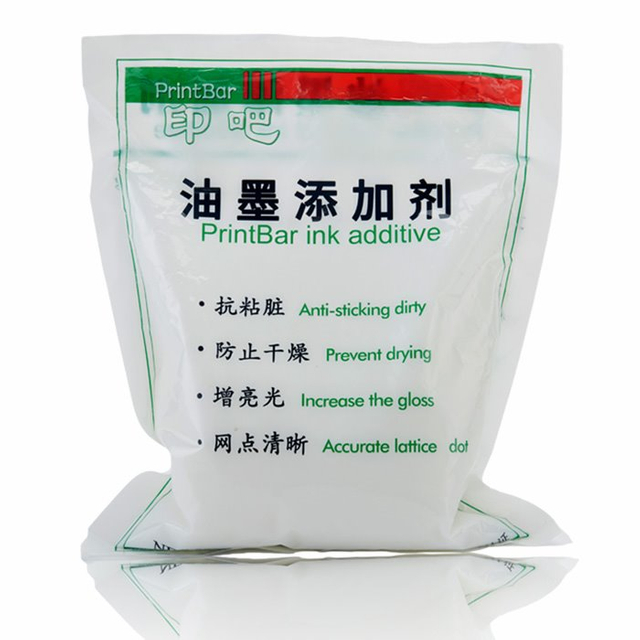
When you do not want to mix recipes: a blended general-purpose additive. Many pressrooms skip recipe-mixing and use one blended additive instead. Stir it in at 3-5% of ink weight and it handles the most common faults in a single pass: paper picking, set-off in the delivery pile, and skinning in the duct. It also keeps dots sharp, lifts gloss, and trims ink consumption. For a small shop that does not want to stock and meter six separate chemicals, one ready-to-use blended additive is the practical shortcut.
Problem | Probable Root Cause | Immediate Field Fix | Permanent Solution |
|---|---|---|---|
Slow Drying / Wet Delivery Pile | Missing driers; dampening solution pH below 4.5; pressroom humidity above 70%. | Increase spray powder; aerate delivery stack; add 0.5% top drier to fountain. | Set fountain solution to pH 4.8-5.5 and conductivity to 800-1500 µS/cm. |
Ink Emulsification & Scumming | Added too much offset printing ink oil (> 5.0%); fountain temp above 15°C (59°F). | Scrape out contaminated duct ink; wash ink rollers; reload clean base ink. | Switch from liquid oil reducers to gelled alkyd tack reducers. |
Paper Picking & Fiber Tearing | Ink tack higher than paper surface strength; cold ink (< 20°C / 68°F); press speed too high. | Blend in 1.0-2.0% gel tack reducer; roller cooling 28-30°C (82-86°F); slow press 15%. | Run paper pick strength checks (ISO 3783 IGT tester) before staging paper lots. |
Ink Skinning in the Duct | Too much top drier; dry air blowing across fountain; press idle over 30 minutes. | Spray anti-skinning aerosol over the duct during stops; scrape dried skin away. | Lower top drier dosage; install fountain roller covers and agitating sweepers. |
VOC Emissions: the EU Solvents Directive and US EPA Method 24 limit volatile organic solvents in press rooms. Sheetfed offset additives use vegetable fatty acid esters and high-boiling distillates (260-290°C / 500-554°F).
Cobalt Drier Phase-Out: under REACH (CMR Cat 1B reclassification), cobalt soaps are being replaced with non-toxic iron-bispidon and manganese-amine catalysts.
Food Contact Packaging: the Swiss Ordinance SR 817.023.21 and EuPIA guidelines require low-migration additives for food cartons. Overall Migration Limits (OML) must stay below 60 ppm (10 mg/dm²).
Safe Handling: store sealed containers between 15-25°C (59-77°F). Wear nitrile gloves and eye protection during manual weighing and spatulation.
No. Estimating with ink knives or pouring by eye leads to press problems. Over-dosing driers causes ink to glaze over and refuse subsequent colors, while adding too much oil reducer causes emulsification and dirty printing plates. All additions must be weighed on a scale accurate to ±0.1 gram.
Too much drier causes ink to skin over in the ink duct while running and creates a hard, glassy surface on the printed paper that blocks following colors from sticking. Too much reducer makes ink watery, causing roller misting, plate scumming, and ink-water breakdown.
An offset printing ink oil is a free-flowing liquid that lowers tack and dynamic viscosity simultaneously, which can weaken ink body and cause emulsification if overused. A gel ink viscosity reducer is a thixotropic paste that lowers surface stickiness and fiber picking without breaking down ink body or gloss.
Inks mixed with oxidative driers or reactive reducers should run on press within 12-24 hours. Exposure to room air starts the curing process in the can, causing lumpy ink. Inks mixed only with clear extender medium or non-reactive gel reducer can be sealed and stored for several weeks.
A standard sheetfed plant needs five baseline auxiliaries: (1) gel tack reducer to stop paper picking, (2) reducer oil to soften heavy stiff inks, (3) cobalt-free combination drier to control curing speed, (4) anti-skinning spray to protect duct ink during press stops, and (5) anti set off powder (starch, 20-25 µm) for delivery stacks.
All five are standard stock at any offset printing ink supplier, and most are supplied by China offset printing ink suppliers.