Views: 0 Author: Site Editor Publish Time: 10-21-2026 Origin: Site


Curing speed, fold flexibility and VOC load decide whether a job wants a UV coater or a conventional varnish unit – and the wrong call surfaces at the die-cutter rather than on the press.
Walk into any commercial print shop or packaging plant and one set of words is already causing damage. UV, varnishing, overprint coating: three terms in daily use for two processes and a dozen expectations.
To designers and print buyers they all sound like ways of making paper shiny. To press operators and shop owners, packaging surface finishing means drying bottlenecks, cracks at the die-cutter, compatibility with foiling and glueing, and the cost of consumables. What follows is how UV coating and print varnish behave on the press floor, and how to match the coating to the job rather than to the sample book.
UV coating lays a UV-curable varnish or ink over printed graphics, either as a flood across the whole sheet or as a spot application on chosen design elements. On dedicated UV presses or curing units, ultraviolet light triggers the photoinitiators in the liquid coating, and the polymerisation reaction locks the film into a solid layer in seconds. The sheet reaches the bindery without racking and without a dusting of spray powder.
A cured UV layer is hard, abrasion-resistant and chemically stable, which is why it stops ink from fading or scuffing in transit. And on dark matte covers and textured packaging stocks, spot UV laid over calligraphy, a brand mark or fine geometric line art builds a raised, tactile contour that catches both the light and the fingers.

In shop talk, varnishing, over-oiling and glazing all mean the same thing: a thin protective layer of oil-based or water-based varnish applied during or immediately after printing. Almost every commercial packaging box gets a baseline coat, because it seals the ink, keeps moisture out and stops the scuffing that shows first on a dark solid.
Under the general heading of print varnish, the choice that matters is gloss against matte. Gloss throws light back brightly and feels slick under the thumb. Matte absorbs light without glare and feels less slippery, which is why gift boxes and dark editorial spreads use it: the surface stays deep and understated, and the pass costs less than any UV work on the same sheet.
A matte sheet is still a coated sheet. It is sealed and protected like any varnished sheet, and the matte film is what keeps the light from bouncing back at the reader.

Whether the job is a high-volume folding carton or a retail pack run in the hundreds, the practical difference between UV coating and conventional varnish comes down to seven shop-floor factors.
UV coating against standard print varnish, by shop-floor factor
Factor | UV coating (spot or flood) | Standard print varnish (oil or aqueous) |
|---|---|---|
Consumables used | Speciality UV varnish or UV-curable inks carrying photoinitiators. | Conventional oil-based varnish or water-based (aqueous) coating. |
Curing principle | Instant chemical polymerisation under ultraviolet lamps. | Physical drying by air evaporation or in heated ovens. |
Tactile feel and look | Ultra-high gloss, rounded 3D raise, distinct contour. | Flat, no relief; available in bright gloss or muted matte. |
Hardness and flexibility | Very hard and scratch-proof, but stiff over tight folds. | Moderate hardness; high film flexibility for folding and creasing. |
Production speed | Cures in seconds, built for high-speed lines. | Natural drying takes hours; heat accelerates it and burns energy. |
Press equipment | Dedicated UV lamps, reflectors and cooling systems, higher capex. | Standard press coating units or basic drying ovens, lower capex. |
VOCs and environmental impact | Near-zero VOC emissions during curing. | Oil-based varnishes release significant VOCs; ventilation required. |

Four things decide whether a UV coating earns its money on a given job.
Curing speed decides how much floor space you own. Oil-based varnish dries through solvent evaporation or heat, so printed sheets can sit for hours before they can be handled. Heating tunnels shorten the wait and lengthen the electricity bill. UV varnish cures the instant the sheet passes under the lamp, so the stack goes straight to the bindery and offsetting stops being a daily argument.
Flexibility is where UV coating fails quietly. Cured UV film is rigid. Flood-coat a paper shopping bag or a tight-creased tuck box with a hard UV varnish and the coating can crack along the fold lines, often not on the press, where everything looked correct, but after die-cutting and folding, with the customer standing over the pallet. Standard oil and aqueous varnishes stay elastic after drying and bend through creasing and box folding.
Spot precision against full-sheet coverage. Conventional over-oiling is almost always applied as a full-bleed flood to protect the board. UV coating earns its keep in spot work, picking out a single brand mark or a fine line pattern while the surrounding stock stays bare. That is also where the savings sit, because only the chosen area carries the expensive consumable.
Post-press compatibility is a consumable question. Where a job runs on to hot foil stamping, embossing or glueing, standard varnish is the easier route. Oil and aqueous varnishes accept foil and adhesive reliably, whereas a cured UV coating leaves a slick, sealed barrier that needs UV-compatible adhesives or a knock-out window. Settle the finish before the job is quoted, because changing it after the foiling has failed costs a reprint.

Designers and press managers rarely choose a single finish for a whole pack. The comparison below sets out where each process earns its place across the three qualities a buyer actually inspects.
Where each finish performs, across the three qualities buyers inspect
Performance quality | UV coating (spot or flood) | Standard print varnish (oil or aqueous) |
|---|---|---|
3D tactile raise and gloss | High: raised contour, mirror gloss. | Low to moderate: flat surface, gloss or matte. |
Curing speed | Very fast: seconds under the lamp. | Slow: hours by air, faster in an oven at an energy cost. |
Fold flexibility | Low: rigid film, cracking risk on tight folds. | High: elastic film, suited to bags and tuck boxes. |
The pattern holds. Where the pack is a display piece (a book cover, a luxury carton, a brochure that has to survive handling on a showroom table), UV coating carries the visual load. Where the pack has to fold, crease, glue and travel cheaply through a filling line, an aqueous coating or an oil varnish does the protective work at a fraction of the consumable cost.

In commercial packaging you rarely have to choose strictly one or the other. Premium property brochures, architectural portfolios and luxury gift boxes usually run both processes on the same sheet.
First the entire sheet is sealed with a full-bleed matte varnish. That protects heavy ink coverage from smudging, keeps the unit cost reasonable and lays down a smooth, low-glare background. Then the sheet takes a spot UV pass, laying a thick, glossy layer over just the brand title, the architectural lines or the background monograms. Against the dark matte base, the raised UV elements carry a contrast and a tactile depth that a flood coat cannot produce, and the box avoids the cost and the cracking risk that come with coating the whole surface in UV.
The question of spot varnish vs spot UV comes up here and is worth being precise about. Both can be applied to selected areas of the same sheet. What separates them is the raise and the wear: a spot varnish sits flat and wears like the rest of the film, while spot UV builds height, reflects harder and survives handling better. It also costs more per sheet, which is why it is usually reserved for the two or three elements a buyer will actually touch.

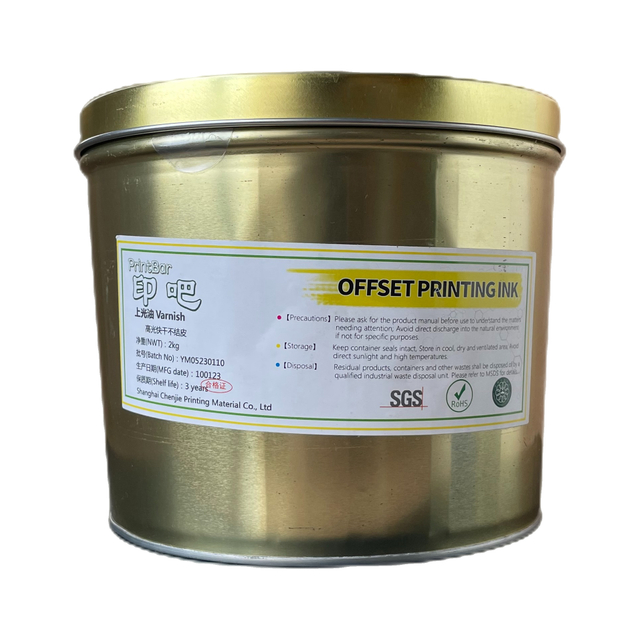
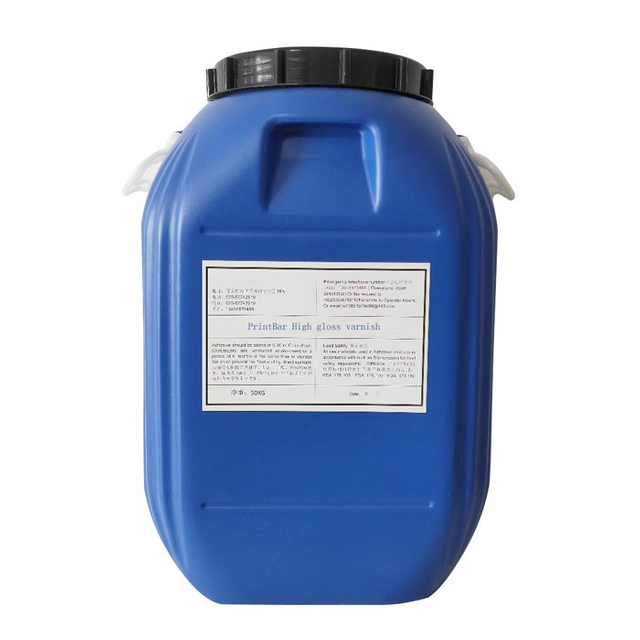
Whether a pressroom runs high-speed UV curing lines for book covers and luxury cartons, or conventional oil and aqueous varnishing for paper bags, folding boxes and labels, consistent coating consumables keep production trouble-free. We supply commercial printers with high-gloss spot UV varnishes, low-odour aqueous coatings and press-ready oil varnishes formulated for fast drying, strong rub resistance and clean post-press finishing.
Contact our technical team to request sample testing or bulk B2B pricing for your press line.