Kinyo MC740 Offset Printing Rubber Blanket
The 0.6 µm face in the range, for work where the dot is the whole job.
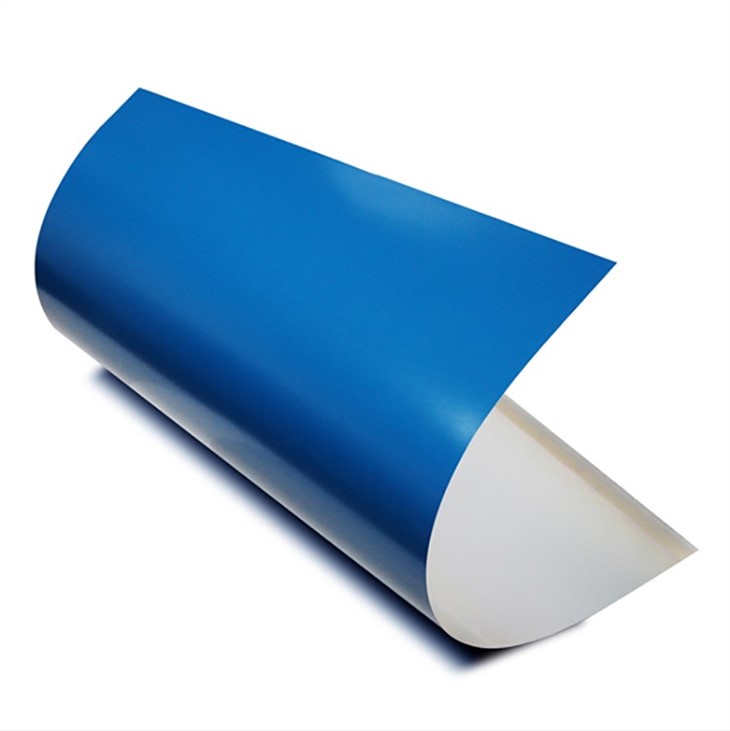
MC740 is the fine-dot sheet-fed blanket in Kinyo's AIR-EXCEL line. Extra-fine ground surface, Ra approx. 0.6 µm, blue, closed cell compressible layer, available in 1.95 mm and 1.68 mm. That roughness figure is the reason to buy it: it is roughly half the Ra of the polished MC7400E, and a smoother face means a tighter dot with less ink spread at the edge.
What it prints on
Sheet-fed presses and packaging printing, per Kinyo's own application listing. The combination that matters is a very smooth surface with a strong carcass, and that pairing points at work with fine screens, small type and photographic reproduction on coated stock. On a solid-coverage carton it prints perfectly well, but you are paying for a surface whose advantage shows up in the 200 line screen, not in the 100 percent black panel.
Why 1.68 mm exists
Kinyo makes this blanket in both 1.95 mm and 1.68 mm. The 1.68 mm version exists for presses whose cylinder undercut is set for the thinner blanket, and for shops that trim the packing to tune cylinder pressure. It is not a lighter-duty product, it is the same construction at a different gauge. Before you order, check the undercut on the press you are fitting rather than assuming 1.95.
The carcass at high speed
Kinyo designates a specially designed carcass for this one, aimed at print stability and blanket life on high-speed sheet-fed presses. Tensile strength is the number that backs that claim: > 85 N/mm, a step above the 80 N/mm of MC7400E. Elongation at 500 N/50 mm is under 1.2 percent, so the blanket does not creep under load. On a press running above 13,000 an hour, that is the difference between holding register for a shift and chasing it every two hours.
Its actual selling point
Buyers shopping by price see a blanket is a blanket. The difference between MC740 and the cheaper sheet next to it shows up after the first hundred thousand impressions: a ground surface with a high tensile carcass holds its dot longer, which means fewer blanket changes and fewer re-makes of the same job. If your volume is high enough that downtime is the real cost, that is what you are paying for.
When to pick a different blanket
MC7400E if the work is heavy solids and cartons more than fine screens. MC7400N if paper-edge marking is your recurring defect. MC5000R if the substrate is tinplate or the ink is aggressive. Different ink chemistry entirely means the UV range.