POPULAR POSTS
-
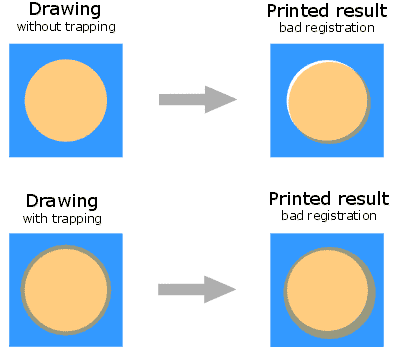 Trapping closes the white gaps misregistration leaves between colours. Substrate, press architecture and ink transparency set the value, not software defaults.



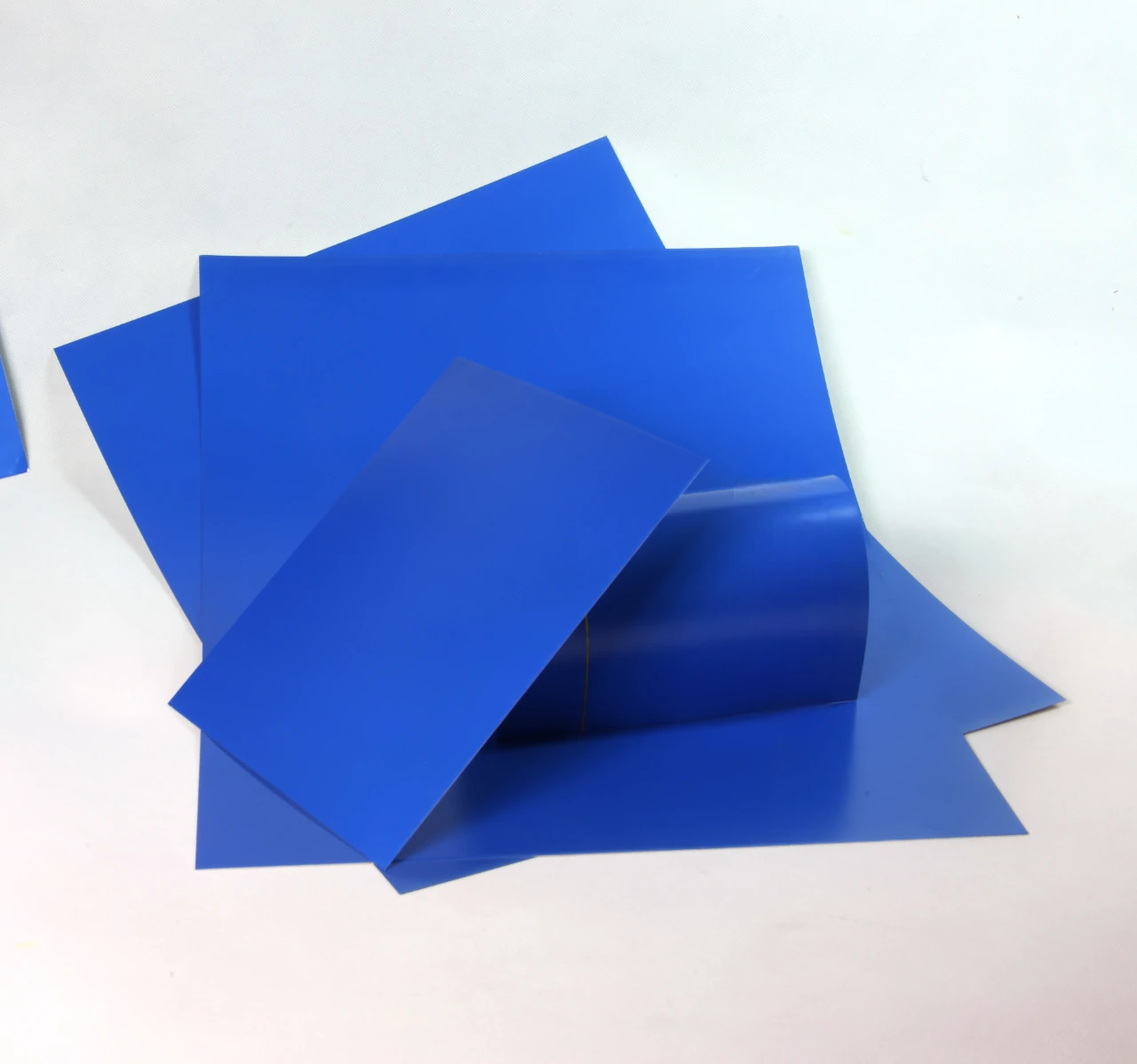
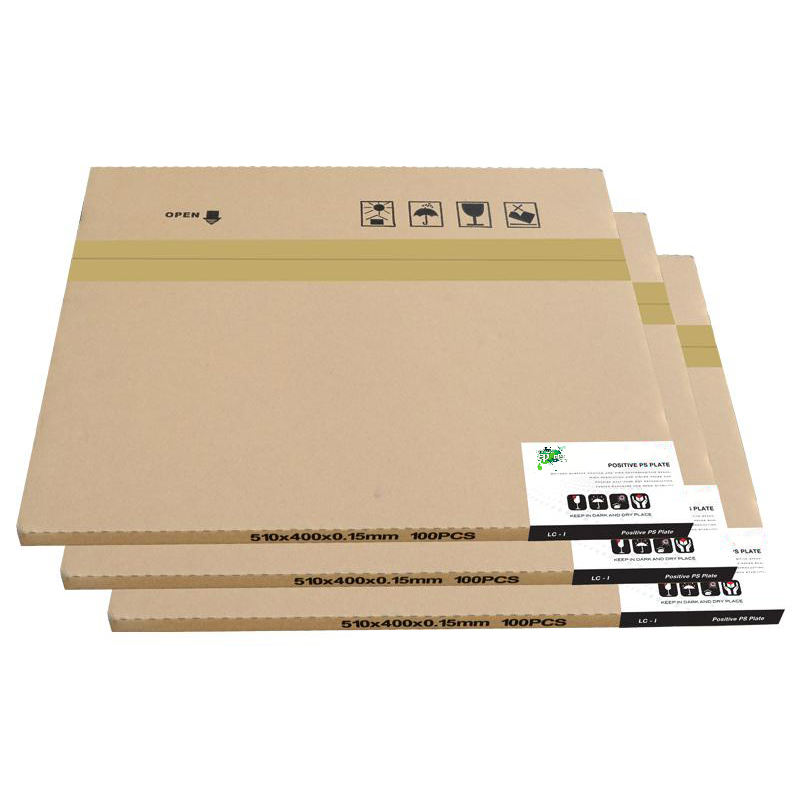
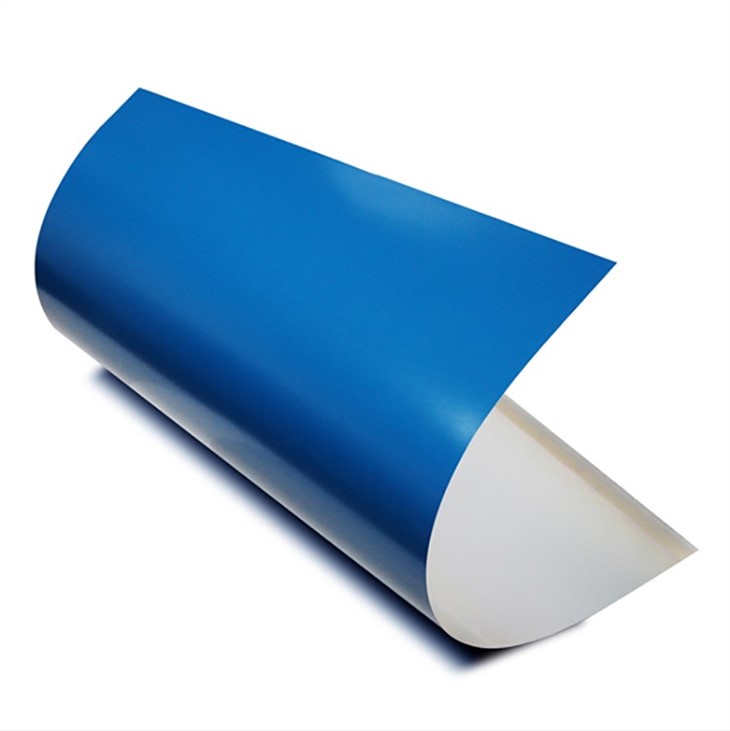
Positive PS Plate
Film stays in the process, and that is the whole point.
Not every shop wants a platesetter. A PS plate still takes a negative, a vacuum frame and a lamp, and it still makes a press-ready sheet for a fraction of the equipment. It exposes in 30 seconds under a 3kW iodine-gallium lamp, develops in 20 to 40 seconds in a 1:7 bath, and resolves 2 to 98%. Unbaked it holds 50,000 to 200,000 impressions.
Film is part of the deal
A PS plate cannot be imaged from a file. You need a negative at density 3.5 or higher, a vacuum frame to pull it flat, and a lamp strong enough to burn through it. That is labour a CTP line does not need, and the reason shops with a platesetter stopped buying these. The shops that still buy them have the film workflow running already and see no reason to tear it out.
Yellow safelight, not daylight
The coating is sensitive from 320 to 450 nm, which is most of the visible range. Plates are opened and handled under yellow safelight, and the room stays that way while film is stripped. A thermal plate lets you work with the lights on; this one does not.
The grain is why the dot holds
The aluminium is electrolytically grained and anodised, so the surface carries a fine, even sand structure under a dense oxide layer. That layer keeps the ink and water split where it should be, holds the dot down to 2% and up to 98%, and is the reason an unbaked plate still runs 50,000 to 200,000 impressions. A granulated surface also pulls vacuum faster, which shortens every exposure and cuts the halo you get where the film sits away from the plate.
Two ways to process it
Machine, hand or slot processing all work on this plate. The bath runs at 23±2°C and the ratio is 1:7, and the temperature matters more than the time: run it hot and the dot goes, along with the run length. Developing past one minute does the same thing more slowly. Huaguang PO developer matches the plate, and the PI image eraser handles retouching.
Specifications
Plate data
Parameter | Value |
|---|---|
Type | Positive-working PS plate |
Spectral sensitivity | 320–450 nm |
Exposure | 30 seconds, about 20 pulses, 3kW iodine-gallium lamp at 1 m |
Developing | 20–40 seconds, developer to water 1:7 at 23±2°C |
Resolution | 2–98% |
Run length | 50,000–200,000 impressions unbaked |
Plate thickness | 0.15 / 0.20 / 0.25 / 0.30 / 0.40 mm, others to order |
Substrate | Aluminium, electrolytically grained, anodised |
Safelight | Yellow |
Film density | 3.5 or higher |
Baking | Optional, 5–10 minutes |
Storage | 10–30°C, 65% RH or less |
Run length is the unbaked figure and it follows ink, stock and press setting. Set the exposure with a UGRA PCW82 strip: the third step un-inking is the working exposure on a positive plate. Tube age moves that number, so re-read the step after a lamp change.
What has to sit beside it
Item | Requirement |
|---|---|
Film | Negative, density 3.5 or above |
Exposure unit | Vacuum frame and a 3kW iodine-gallium lamp |
Developer | Huaguang PO type for positive plates |
Retouching | Huaguang PI image eraser, 45 seconds maximum contact |
Gum | Plate gum after washing, concentration per the gum maker |
Baking gum | Only if the job needs a longer run |
Storage and handling
Keep plates between 10 and 30°C at 65% relative humidity or less, still sealed, away from light and heat. Light and warmth both change the coating, and a plate that has sat in a hot store will show it as a loss of dot reproducibility before it shows anything else. Break the seal under yellow safelight, not in the open room.
When to pick a different plate
This plate is the right answer only while the film workflow is still standing. If the shop has a platesetter, the four plates below beat it on speed and on labour, and most of them beat it on run length too.
Plate | Exposure | Development | Run length | Pick it when |
|---|---|---|---|---|
Positive PS plate | 320–450 nm | 20–40 s | 50,000–200,000 unbaked | the shop still images from film |
CTCP plate (UV) | 400–410 nm | 20–30 s | 100,000–200,000 unbaked; 50,000–100,000 UV | the platesetter runs UV diodes |
Thermal CTP plate | 800–830 nm | 20–30 s | 200,000–400,000 ordinary; 100,000–200,000 UV | the job runs long and the lights stay on |
Double-coated thermal CTP | 800–830 nm | 20–30 s | 200,000–400,000 ordinary; 100,000–200,000 UV | the dot matters more than the price |
Processless thermal CTP | 830 nm | none | up to 100,000 | the chemistry has to leave the building |
One thing keeps this plate on the shelf: a film workflow that is still paid for and still working. Take that away and the reason left to buy it is a job that a platesetter cannot reach, which is rarer than the price list suggests.