POPULAR POSTS
-

How commercial and packaging print shops stop giving away free design hours, quote file prep fairly, and talk to clients without sounding like a prepress textbook.



Thermal CTP Plate
The plate that does not care whether the lights are on.
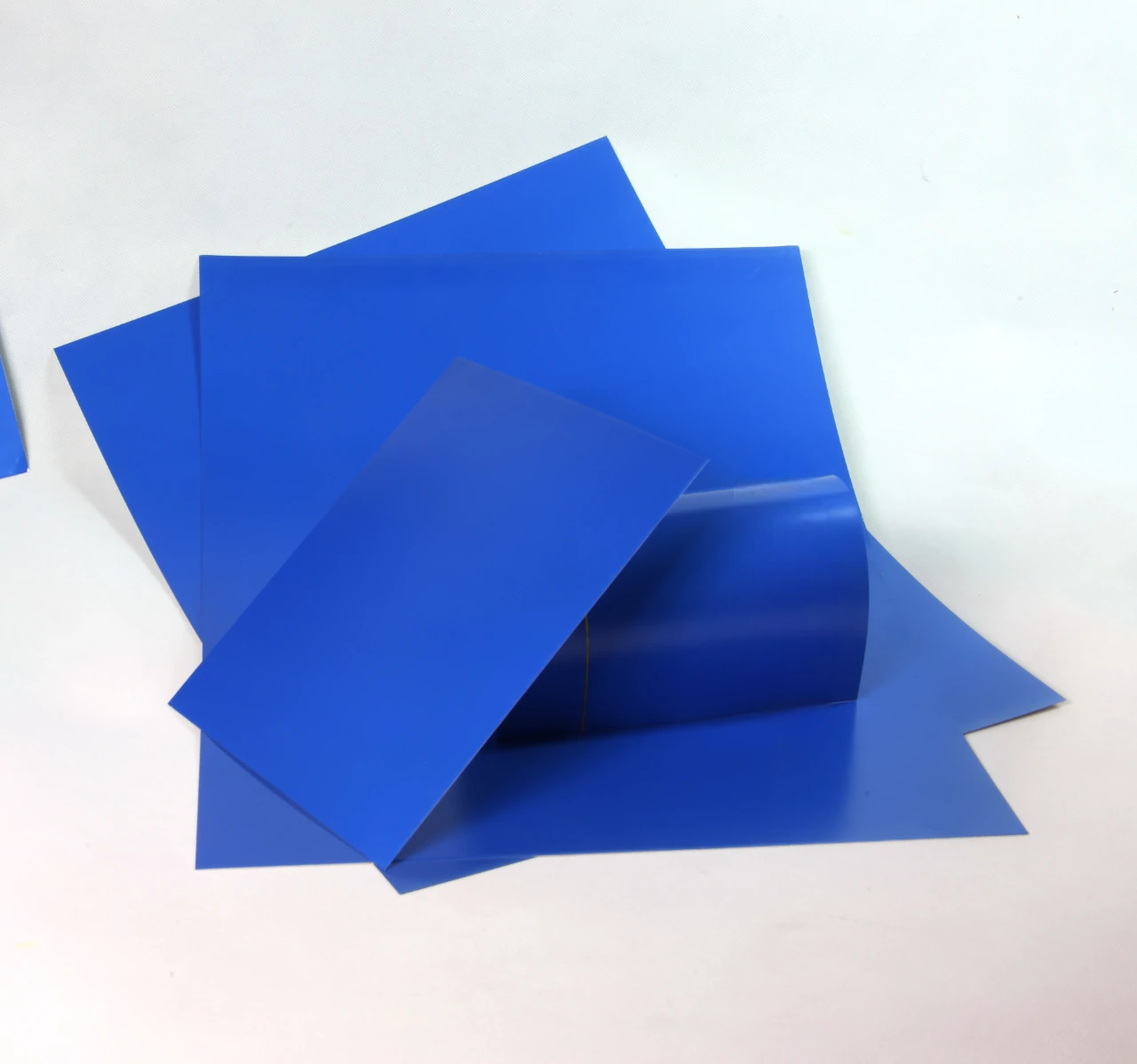
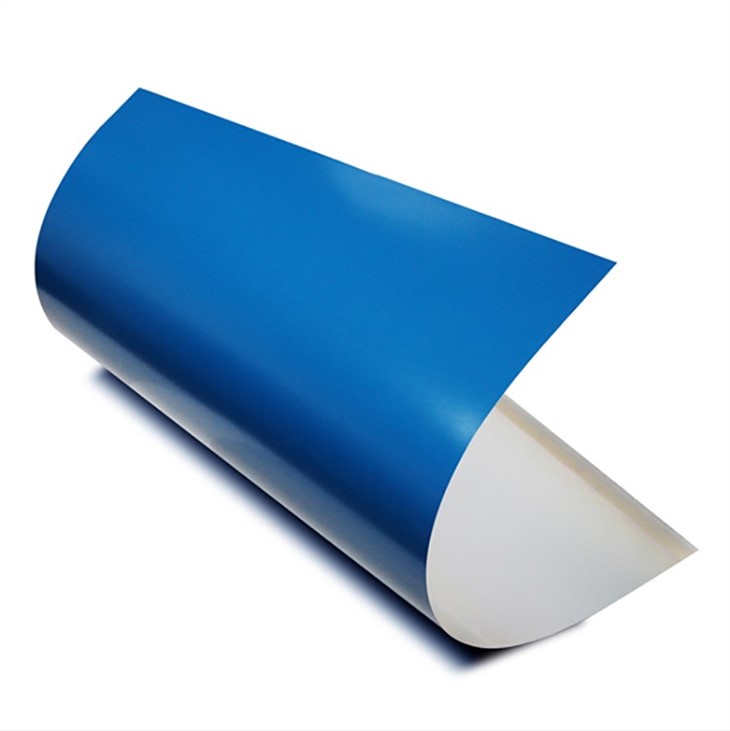
Load it in a bright room, image it at 830 nm, and expect 200,000 to 400,000 impressions on ordinary ink. It needs 100 to 110 mJ/cm², resolves 1 to 99% at 200 lpi, and mounts on the thermal platesetters already standing in most pre-press rooms. No darkroom, no safelight, no new imaging head.
Bright room, and it means bright room
The coating responds to heat, not to light, so white light does not fog it. Plates get opened, cut and loaded with the room lit, and pre-press stops working around a safelight. This is the difference operators notice first when they come off a UV-CTP line, and the one they complain about losing when they go back.
The substrate holds the run, not the coating
Aluminium is grained electrolytically until the surface carries an even, fine sand structure, then anodised into a dense oxide film. That film is what keeps the coating bonded to the metal under load, and it is what stands between 200,000 impressions and 400,000. It also gives the dot a sharp edge, which is why a plate built this way still holds 1 to 99% at 200 lpi instead of collapsing at both ends of the scale.
Ordinary ink runs twice as long as UV
Ordinary ink gets 200,000 to 400,000 impressions. UV ink gets 100,000 to 200,000, which is the honest number and the one buyers check first. If the job is UV and the run is long, this plate can be baked to extend it, and the baked figure is what the press schedule should be built on.
Two versions on this page
S is the standard sheet and the one most orders ship as. L carries a longer run than S on the same exposure and the same processing, which matters when a job sits in the middle of the range and baking it would slow the schedule down. A third plate, G, adds a second coating for finer dot work and has its own page.
Specifications
Plate data
Parameter | Value |
|---|---|
Type | Positive thermal CTP plate, S and L versions |
Spectral sensitivity | 800–830 nm |
Exposure energy | 100–110 mJ/cm² |
Resolution | 1–99% at 200 lpi |
Run length | 200,000–400,000 impressions on ordinary ink; 100,000–200,000 on UV ink |
Substrate | Aluminium, electrolytically grained, anodised, dense oxide film |
Platesetter | Any thermal CTP platesetter, no settings change |
Working light | Bright room |
Baking | Optional, for long UV ink runs |
Plate size | Standard sizes, others to order |
Run length moves with ink, coverage, stock and press setting, and the figure quoted is unbaked. A shop running heavy solids on coated stock will land at the bottom of the range; a text job on offset paper will pass the top of it.
Storage and handling
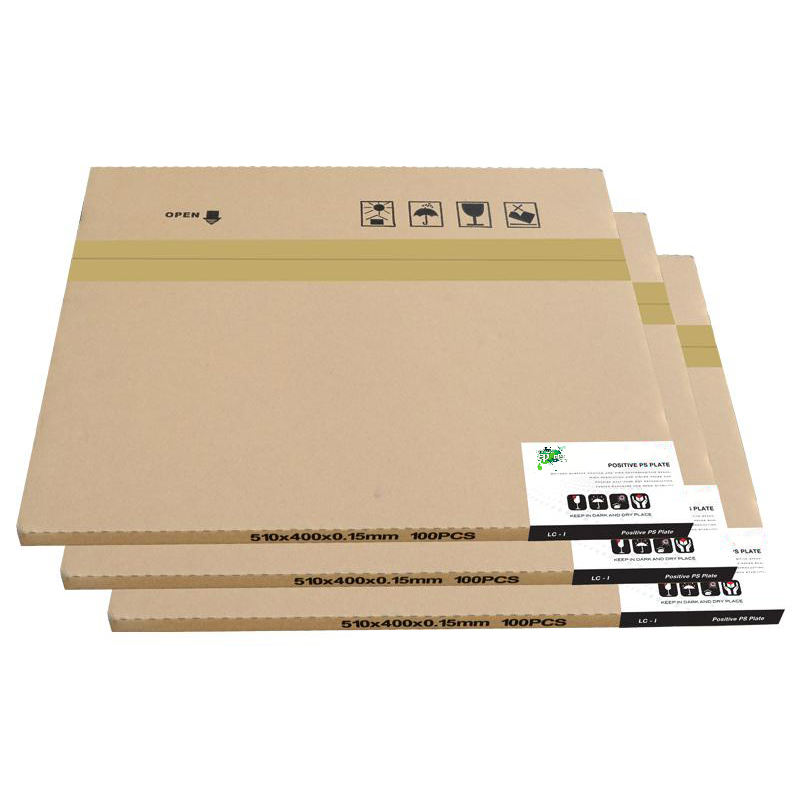
Keep the cartons sealed, dry and away from heat. The coating answers to temperature, so a store room that bakes in summer is a store room that shortens shelf life. Bright room handling is not the same thing as rough handling: plates still get cut square, loaded flat and kept off the floor.
When to pick a different plate
This is the general-purpose plate in the range and the one most orders should land on. It loses on three counts only: a pre-press still running UV diodes, a dot requirement past 200 lpi, or a chemistry bill that has to come down.
Plate | Exposure | Development | Run length | Pick it when |
|---|---|---|---|---|
Positive PS plate | 320–450 nm | 20–40 s | 50,000–200,000 unbaked | the shop still images from film |
CTCP plate (UV) | 400–410 nm | 20–30 s | 100,000–200,000 unbaked; 50,000–100,000 UV | the platesetter runs UV diodes |
Thermal CTP plate | 800–830 nm | 20–30 s | 200,000–400,000 ordinary; 100,000–200,000 UV | the job runs long and the lights stay on |
Double-coated thermal CTP | 800–830 nm | 20–30 s | 200,000–400,000 ordinary; 100,000–200,000 UV | the dot matters more than the price |
Processless thermal CTP | 830 nm | none | up to 100,000 | the chemistry has to leave the building |
When in doubt, quote this one. It covers the widest band of ordinary commercial work and the two plates below it on the list exist for specific jobs, not for general use.