How commercial and packaging print shops stop giving away free design hours, quote file prep fairly, and talk to clients without sounding like a prepress textbook.
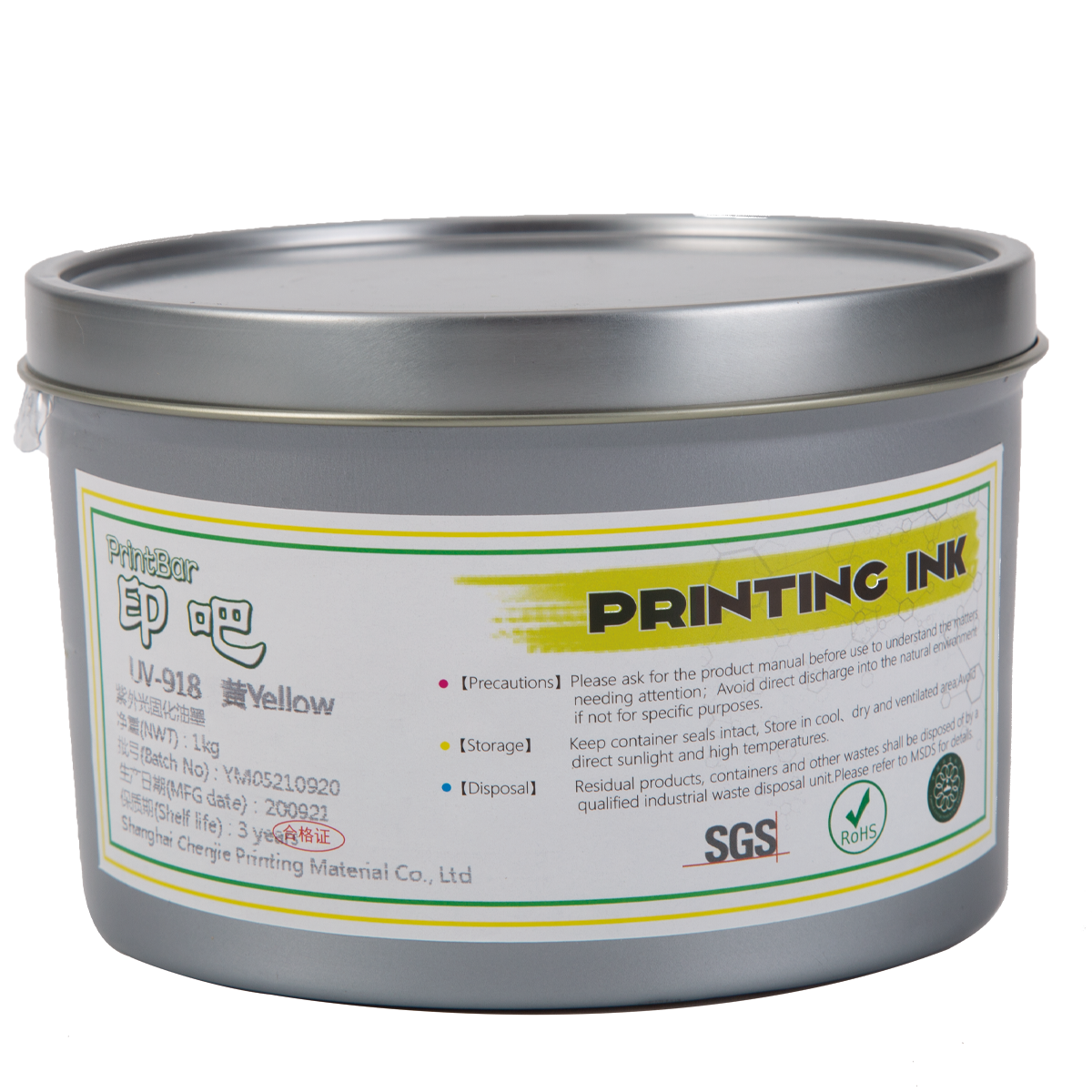
Soybean oil green ink. 2.5 kilo tins. High gloss, clean dots, rub resistance that holds. Dries quick on paper but stays open on press. Good color balance across a full CMYK set. Three years Shelf.
Our complete range of sheet-fed, web-fed and specialty inks — product grades, print applications, technical properties, packing and shelf life in one downloadable brochure.
Soybean oil base, 48 hours before a skin forms, and gloss between 60 and 70.
KE is our soybean oil eco-friend ink series, sold for high-quality colour work on sheet-fed offset presses, single colour or multi. Tack 9.5-10.5, particle 12.5 µm, setting in 5 minutes, paper dry inside 8 to 10 hours. Two numbers separate it from the 107 line: gloss at 60 to 70 against 70 to 80, and skin time at 48 hours against 120. Neither one is a secret, and both change which jobs it suits.
What it prints on
Sheet-fed offset presses, single and multi-colour. The sheet describes the target as high-quality colour printing, and its drying column is measured on paper, so this is a paper ink. Film, foil and non-absorbent stock belong to the UV line.
48 hours of skin time
Two days. An overnight stop is inside that window, and a weekend is not: Friday evening to Monday morning runs past 60 hours, so Monday starts with a skin on the rollers. The 107 line carries 120 hours because it was built for presses that sit idle. KE was not. If the duct stays full from Friday to Monday, buy the 107-4.
Gloss of 60 to 70
Yellow reaches 70, magenta and cyan sit at 60, black at 65. The 107 sheets run 70 to 80 with the same tack, so ten points of gloss is what you trade away here. On coated stock, with the two prints side by side, that difference reads. What the sheet offers back is the soybean oil base and rub resistance, which it names in both versions of the datasheet.
On press
The sheet lists stability, colour balance, dot reproduction, quick drying and no skinning on the machine during a run. Water and ink balance is not on the KE list, though the 107 sheets carry it, so a shop that fights ink and water on every job should start with the 107-4 instead.
Specifications
Colour data
Colour
Tack (32°C)
Fluidity (mm)
Particle (µm)
Gloss
Setting (min)
Paper dry (hr)
Skin time (hr)
Magenta
9.5-10.5
37±1
12.5
60
5
<8-10
48
Yellow
9-10
38±1
12.5
70
5
<8-10
48
Cyan
9-10
36±1
12.5
60
5
<8-10
48
Black
9.5-10.5
36±1
12.5
65
5
<8-10
48
Yellow is the one colour in the set at 70 gloss. Magenta and cyan sit at 60, black at 65, so a four-colour job loses its sheen on three of the four plates rather than on the black.
Chemical resistance
Colour
Light
Heat
Acid
Alkali
Alcohol
Soap
Magenta
6
4
4
4
4
5
Yellow
5
4
4
5
4
4
Cyan
8
5
5
5
5
5
Black
8
5
4
4
5
5
How to read the scale
Light is scored out of 8 on the rest of the range and the other five columns out of 5, with a higher number better. Cyan and black sit at 8 on light, which is as high as this set goes. Magenta at 6 and yellow at 5 are the two that fade first.
Packing
2.5 kg tin. Three years from the production date, kept dark and dry.
When to pick a different ink
KE and the 107-4 are both soybean oil inks and carry the same tack, so the choice between them comes down to gloss and to how long your press sits still. The rest of the range splits on speed, tack and price. The table is the whole ladder from one datasheet to the next.
Series
Press speed
Tack
Gloss
Skin time
Pick it when
H-type (resin)
8,000-10,000/h
5.5-7.5
not quoted
>15 h
the press is old, the stock is thin, the budget is tight
KE (soy)
not quoted
9.5-10.5
60-70
48 h
the label needs soybean oil and the press works every day
107-4
12,000-15,000/h
9-10.5
70-80
120 h
the duct sits full over the weekend and you want the gloss
107-6
not quoted
9-10.5
70-80
120 h
price decides, or the job wants the super black
107-8
14,000-16,000/h
9-10.5
70-80
120 h
the press runs 14,000 an hour on art albums and cartons
UV line
not quoted
not applicable
not applicable
not applicable
the stock is film, foil or coated metal
Below 10,000 an hour with ordinary paper and ordinary work, the H-type does the job for less. Between 10,000 and 15,000 the 107-4 is the one with the weekend covered. Above 15,000 the press is asking for the 107-8.