POPULAR POSTS
-

How commercial and packaging print shops stop giving away free design hours, quote file prep fairly, and talk to clients without sounding like a prepress textbook.


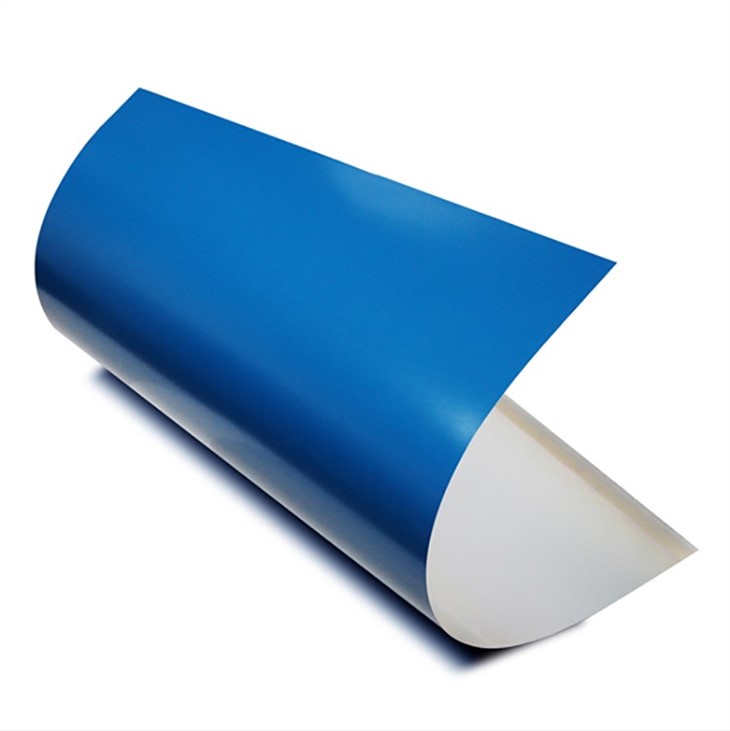

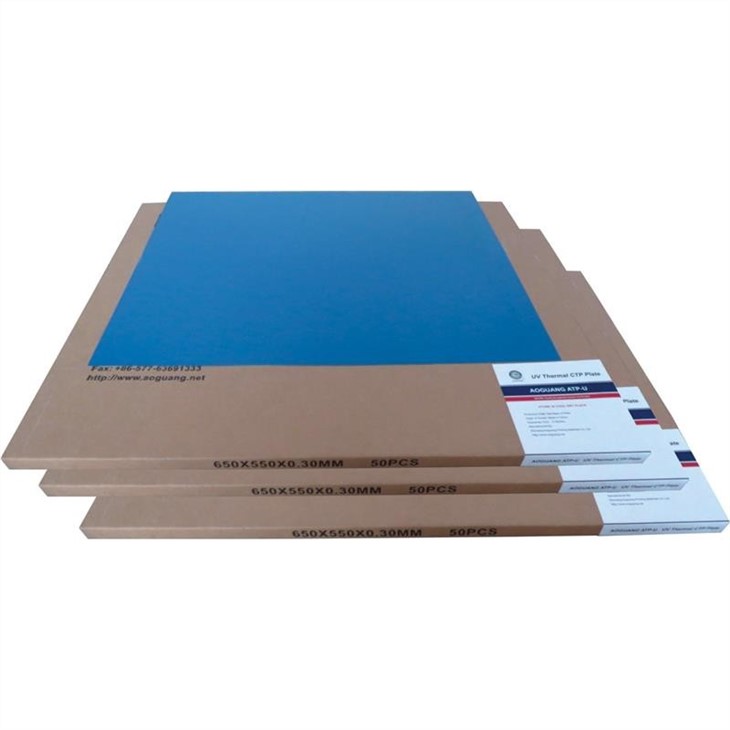

CTCP Plate (UV CTP)
A UV diode head instead of a thermal one, and the safelight goes back to yellow.
CTCP imaging runs at 400 to 410 nm under a UV diode head, not the 830 nm of a thermal laser. That single difference decides where the plate works, how the room is lit, and what it costs to keep running. It needs 40 to 50 mJ/cm², develops in 20 to 30 seconds at 1:4, and holds 2 to 98% at 250 lpi.
The room goes back to yellow light
This is the trade that comes with UV diodes. A thermal plate images in a bright room; this one does not, because the coating answers to light the eye can see. Plates are opened, cut and loaded under yellow safelight, and the pre-press stays lit that way. If the plan was to put the platesetter down next to a window, plan again.
What the shorter wavelength buys
UV imaging needs 40 to 50 mJ/cm² where a thermal plate asks for 100 to 110, so less energy goes onto the coating to make the same dot. The UV-sensitive layer is built on the same electrolytically oxidised aluminium base as the rest of the range, and the S version carries two coatings for a higher sensitivity and a longer printing process than a single coat.
250 lpi and 25 micron FM
The halftone runs 2 to 98% at 250 lpi in AM screening, or 25 micron in FM, which covers commercial sheetfed and rotary work without argument. Dot reduction is stable across the shelf life, so a plate pulled from a six-month-old carton images the same as one from a fresh one. That stability is the flattest thing about this plate and the reason to keep it stocked.
UV ink halves the run, unless you bake
Unbaked, this plate runs 100,000 to 200,000 impressions on ordinary ink. On UV ink it does 50,000 to 100,000. If the job is UV and the run is long, bake the plate: a baked UV-CTP plate takes UV ink properly and gets you back toward the unbaked number. The plate will not do that on its own, and no amount of care at the press changes the coating.
Specifications
Plate data
Parameter | Value |
|---|---|
Type | Positive UV-CTP plate, S type double coating |
Spectral sensitivity | 400–410 nm |
Exposure energy | 40–50 mJ/cm² |
Developing | 20–30 seconds, developer to water 1:4 at 23±2°C |
Resolution | 2–98%, 250 lpi AM and 25 micron FM |
Run length | 100,000–200,000 impressions unbaked on ordinary ink; 50,000–100,000 on UV ink |
Substrate | Aluminium, electrolytically oxidised |
Safelight | Yellow |
Baking | Optional; needed before long UV ink runs |
Plate size | Standard sizes, others to order |
Run length is measured unbaked on ordinary ink and it follows coverage, stock and press setting. The 1:4 ratio and the 23°C bath are working conditions, not suggestions: a weaker mix leaves coating on the non-image area and a hotter bath eats the dot.
Storage and handling
Sensitivity, dot reduction and run length all move very little across the shelf life, provided the plate is stored sealed, dry and out of the light. Break the carton under yellow safelight and keep it closed between jobs. A plate left open in a lit pre-press is a plate that develops itself slowly.
When to pick a different plate
This plate exists for shops running UV diode platesetters. If the machine in the corner is a thermal one, it will not image this plate at all, and the four below are the ones to look at.
Plate | Exposure | Development | Run length | Pick it when |
|---|---|---|---|---|
Positive PS plate | 320–450 nm | 20–40 s | 50,000–200,000 unbaked | the shop still images from film |
CTCP plate (UV) | 400–410 nm | 20–30 s | 100,000–200,000 unbaked; 50,000–100,000 UV | the platesetter runs UV diodes |
Thermal CTP plate | 800–830 nm | 20–30 s | 200,000–400,000 ordinary; 100,000–200,000 UV | the job runs long and the lights stay on |
Double-coated thermal CTP | 800–830 nm | 20–30 s | 200,000–400,000 ordinary; 100,000–200,000 UV | the dot matters more than the price |
Processless thermal CTP | 830 nm | none | up to 100,000 | the chemistry has to leave the building |
If the run is short, the ink is ordinary and the pre-press is already yellow, this plate is the cheapest way to get a CTP dot onto the sheet. If any one of those three changes, read the row above it.